If you own a home on one of Cape May County's barrier islands, you have probably wondered if seed would do the job for less. Here is a plain look at both options on island sand.
The short answer
On a barrier island, sod is the more reliable way to get a lawn. Seed costs less up front, but it has to sprout and survive in sand that dries out fast, in wind, with salt in the air. Sod arrives as mature grass with roots already grown. You have a full lawn the day it goes down.
We only install sod. We do not sell seeding. Below we explain why, and where seed still has a place.
What an island yard is working with
Lawns on Five Mile Beach, Seven Mile Island or in Ocean City face the same basic conditions:
- Sand. Island soil is mostly sand, often mixed with fill. It drains in minutes and holds very little water or food.
- Wind. Open lots near the beach and bay get steady wind. Wind dries the surface and can move loose seed.
- Salt spray. Salt in the air settles on yards close to the water. Young grass handles it poorly.
- Heat. Sand, pavement and siding throw heat back at a lawn in summer.
- Owners who are not always there. Many island homes are second homes or rentals. Nobody is on site to water three times a day.
None of this makes a lawn impossible. It just means the lawn needs the right start.
Why seed struggles on sand
Grass seed has to stay damp at the surface until it sprouts and roots. On sand, the top layer can dry out in a few hours on a sunny, windy day. One missed watering at the wrong time can kill a whole batch of seedlings.
Then there are the other problems:
- Wind and heavy rain wash seed into piles and leave bare spots.
- Birds eat seed.
- Weeds sprout in the gaps faster than thin grass can fill them.
- New seedlings are tender. Foot traffic, dogs and salt spray set them back.
- A seeded lawn takes a full season or more to fill in. Many need to be seeded again.
For a home that sits empty during the week, that is a lot to ask.
Why sod handles island conditions better
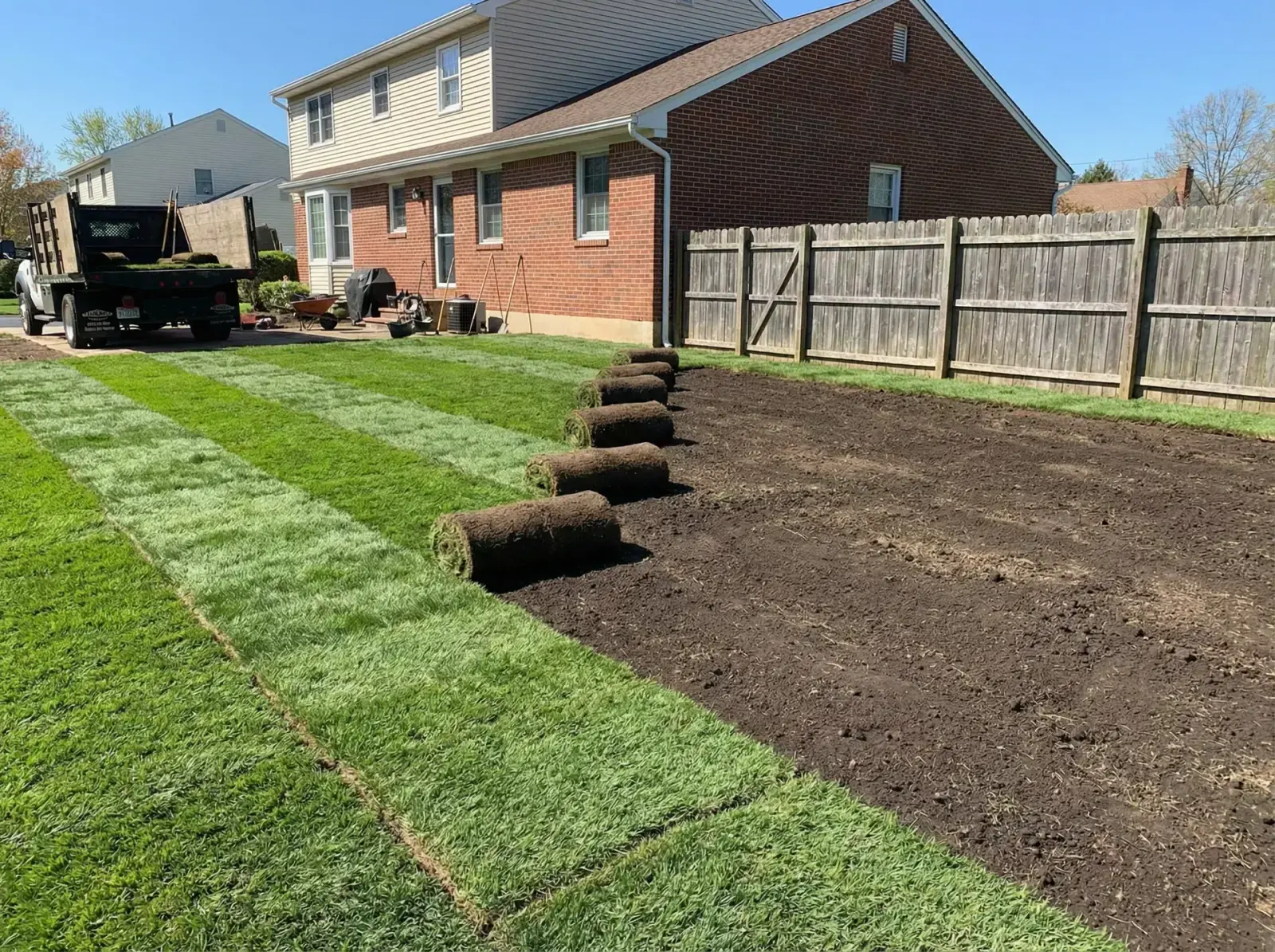
Sod skips the hardest stage. Our tall fescue grows for 9 months on our farm before it is cut. It is cut the morning of your install. When it lands in your yard, it is already a thick, mature lawn.
That matters on the islands in a few ways:
- Dense cover from day one. There are no bare gaps for weeds or wind to work on.
- Roots that are already grown. The sod only has to knit into the soil below it, not start from nothing.
- Tall fescue. It roots deep and handles heat and sandy ground better than many lawn grasses.
- One day of work. The lawn goes in on install day, not over a season.
Sod still needs good soil under it. On sand, we build that soil first with composted topsoil, lime and starter fertilizer. Then a 300 lb roller presses the sod down so the roots touch the soil. See the full process on our sod installation page.
Side by side
| Seed | Sod | |
|---|---|---|
| Up front cost | Lower | Higher |
| Time to a full lawn | A season or more | Install day |
| Early watering | Surface kept damp for weeks | Steady watering while roots set |
| Bare spots and weeds | Common while it fills in | Little room for weeds |
| Wind and heavy rain | Can wash seed away | Sod stays in place |
| Fits a second home | Hard without daily care | Easier, with irrigation |
| Risk of starting over | Real | Low with good prep and water |
Water decides it either way
Sod or seed, a new lawn on sand lives or dies on water. Sod is more forgiving, but it still needs steady watering while the roots grab hold.
On lawns over about 1,500 square feet, we only install sod with in-ground irrigation, or after we check an existing system. A hose cannot keep that much new grass alive. A new zoned system typically runs $2,850 to $3,950, built with Toro parts. Our page on why irrigation matters covers this in more detail.
Where seed does belong
Seed is not useless. It is the wrong tool for starting a lawn on bare sand. It is a good tool for keeping a healthy lawn thick.
Once you have an established lawn, aerating and overseeding in the fall can help it stay full. That is upkeep for good grass, not a fix for a yard of sand and weeds.
What sod costs here
A full install is $2.85 per square foot for most yards, with a $2,000 project minimum. That includes removing the old lawn, the soil prep, the sod, rolling and 30 days of aftercare. Text us your address on our quote page for a written price.
Quick answers
Can I just seed and see what happens? You can, but on island sand the odds are poor without constant watering. Many seeded lawns need to be redone.
Will sod grow on pure sand? Not well on its own. We build up composted topsoil, lime and starter fertilizer first. That soil is what the roots grow into.
Does salt spray hurt sod? Salt in the air is hard on any lawn grass, especially young seedlings. Mature sod with good soil and regular watering holds up far better than new seed.
Do you offer seeding? No. We install sod only.
Should I seed my lawn later? Once the sod is established, fall aeration and overseeding can help keep it thick. That is maintenance, not a way to start a lawn.